Showing posts with label electronics. Show all posts

Electrical Engineering 101: Everything You Should Have Learned in School but Probably Didn't Review

Electrical Engineering 101: Everything You Should Have Learned in School but Probably Didn't
Average Reviews:

(More customer reviews)
Are you looking to buy Electrical Engineering 101: Everything You Should Have Learned in School but Probably Didn't? Here is the right place to find the great deals. we can offer discounts of up to 90% on Electrical Engineering 101: Everything You Should Have Learned in School but Probably Didn't. Check out the link below:

>> Click Here to See Compare Prices and Get the Best Offers

Electrical Engineering 101: Everything You Should Have Learned in School but Probably Didn't ReviewIf Horowitz and Hill have got your perplexed [ISBN: 0521370957], you need to read Ashby first. Without a firm grasp of the fundamentals delved by Ashby, a reader could be very lost. This is a book you can read BEFORE an electronics course, to guide you through what could be a confusing maze. This book is not focused on design, but on a faster way to understand fundamentals in electronics by developing intuition and removing as much math jumble as possible. Included are chapters for dealing with EE management and other EE related companies.
This book is also exceedingly helpful for those in a non-Engineering track electronics courses, who maybe overwhelmed by the depth and audacity of a non-Engineering text like Horowitz and Hill.
Here are its key points:
Pros
Very easy to read, user friendly;
Easy to comprehend;
Key concepts summed as rules of thumb on a side bar [ I use all regularly since I graduated in 1980 to this very day];
Superb editing, I noticed but one typo p. 166 "Let'ss";
Helps EE students focus on the essentials of key fundamental component function;
Broad audience, applicable to the technician level versus EE;
Touchy feely chapter works in many fields beyond EE;
Helpful tidbits in the EMI chapter were superb!Cons
Not enough material to get a design together, some assumption one has tried design and knows some in-outs;
Need examples of a "putting it all together" using rules in sample design problems;
No surface mount tips for a book written for the 21st Century EE?
No catalog of manufacturers for construction?
No tips on free samples?
No tips on free evaluation boards?
In my view, the hallmark of a good electronics student is the capacity to design a working electronic device. True design skills gives students the insight to fix, alter, salvage or improve most anything made in electronics even if a student never ever builds a device from scratch ever, after graduation. However, the reverse is not true, a student raised on "fix-it" can not necessarily design.
Comments:
While praise is heaped on the LM324 as an historical op amp, I believe it was the LM741 that clearly made op amps the workhorse of analog design. Much has improved since in op amps, but understanding the 741 is to understand them all. The 324 was a popular chip due to single rail supply but the 741 set the specs to beat. No mention is made about the 555 timer, although one can always build a RC oscillator with just an op amp.
The CD:
The enclosed software is extremely useful, to me. However, its enclosed PCB123, a routing PC board designer, is more likely for EE 202 than 101. I think students need to learn to do layout by hand at least once, just as they need to know how to do math +/-*
functions by hand even if they use a calculator throughout life.
Filter Pro is also in the same vein, EE 202. Very useful software but not discussed much in the text. At least one type of each has to be designed by hand: hi, lo, bandpass, band reject from all passive, then to active, before contemplating automation.
Conclusion:
Although passive components and isolated op amp designs are less practical these days, it absolutely necessary to grasp the fundamentals of RLC to make any electronics as easy as 1-2-3, from Course 101 to 999. One must not be lost in details.
Ergo: Crawl before walk, even if running is all we really do in the real world ;) we walk a lot too, and we can always crawl if we need to.Electrical Engineering 101: Everything You Should Have Learned in School but Probably Didn't Overview

Want to learn more information about Electrical Engineering 101: Everything You Should Have Learned in School but Probably Didn't?

>> Click Here to See All Customer Reviews & Ratings Now
Read More...

The Designer's Guide to VHDL (Systems on Silicon) Review

The Designer's Guide to VHDL (Systems on Silicon)
Average Reviews:

(More customer reviews)
Are you looking to buy The Designer's Guide to VHDL (Systems on Silicon)? Here is the right place to find the great deals. we can offer discounts of up to 90% on The Designer's Guide to VHDL (Systems on Silicon). Check out the link below:

>> Click Here to See Compare Prices and Get the Best Offers

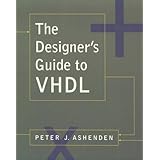
The Designer's Guide to VHDL (Systems on Silicon) ReviewUntil Peter's next book comes out of course! I would give it 5 stars if I was just learning the VHDL language, but I'm actually trying to use VHDL for FPGA design and this book falls short in that regard.
This book is really good at explaining the 'mechanics' of VHDL programming. It is an out growth of Peter's "Intro to VHDL" paper that was published on the web and it sort of shows. I really like the depth that it goes into, I wish it had the standard libraries in the appendix. (it doesn't) However, until getting Ashendon's book, all other VHDL texts were pretty opaque.
The only thing this book does not have is a treatment of logic 'inference.' Since all VHDL compilers today "infer" (a fancy way of saying "guess") what logic would be able to implement a behavior, not understanding how those compilers guess makes it possible to write syntactically clean VHDL that doesn't synthesize any logic. To get a better handle on inference I'd recommend "HDL Chip Design" by Smith.The Designer's Guide to VHDL (Systems on Silicon) Overview

Want to learn more information about The Designer's Guide to VHDL (Systems on Silicon)?

>> Click Here to See All Customer Reviews & Ratings Now
Read More...

Getting Started with Arduino (Make: Projects) Review

Getting Started with Arduino (Make: Projects)
Average Reviews:

(More customer reviews)
Are you looking to buy Getting Started with Arduino (Make: Projects)? Here is the right place to find the great deals. we can offer discounts of up to 90% on Getting Started with Arduino (Make: Projects). Check out the link below:

>> Click Here to See Compare Prices and Get the Best Offers

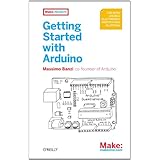
Getting Started with Arduino (Make: Projects) ReviewWhile some reviewers decry the intro "fluff" chapters and the simplicity of some of the projects, by the end of this short book, you will have been exposed to many of the capabilities of the Arduino microcontroller. I found the book's projects to be very informative and fun. One warning to buyers: You will need to buy a few more electronic parts to take full advantage of this book and it's projects. Here's what you should get:
1. 5-10 x 10K-Ohm resistors
2. 1 x Momentary push button switch (4 pin), compatible with a breadboard
3. 5 x LEDs of differing colors (most will work with the 3-5V output of the Arduino).
4. 1 x MOSFET or 1 x 5V actuated relay (this is to turn on/off motors)
5. 1 x solder-less breadboard
6. 1 x jumper wire kit (various lengths and colors of short wires)
7. 1 x LDR (light dependent resistor)
8. 1 x 9V (or similar magnitude) battery case with leads for a breadboard
9. 1 x small motor (5-9V).
It seems like quite a bit, but if you get and use these parts with the projects, you will learn how to use sensors to take in data from the environment, have the Arduino process it, and then drive a response (in the form of lighting LEDs, turning on motors, etc.). Fortunately, the Arduino itself is USB-powered, so the other power sources (i.e. the battery case) will only be needed to run things like the motor.Getting Started with Arduino (Make: Projects) OverviewThis valuable little book offers a thorough introduction to the open-source electronics prototyping platform that's taking the design and hobbyist world by storm. Getting Started with Arduino gives you lots of ideas for Arduino projects and helps you get going on them right away. From getting organized to putting the final touches on your prototype, all the information you need is right in the book. Inside, you'll learn about:
Interaction design and physical computing
The Arduino hardware and software development environment
Basics of electricity and electronics
Prototyping on a solderless breadboard
Drawing a schematic diagram
And more. With inexpensive hardware and open-source software components that you can download free, getting started with Arduino is a snap. To use the introductory examples in this book, all you need is a USB Arduino, USB A-B cable, and an LED. Join the tens of thousands of hobbyists who have discovered this incredible (and educational) platform. Written by the co-founder of the Arduino project, with illustrations by Elisa Canducci, Getting Started with Arduino gets you in on the fun! This 128-page book is a greatly expanded follow-up to the author's original short PDF that's available on the Arduino website.

Want to learn more information about Getting Started with Arduino (Make: Projects)?

>> Click Here to See All Customer Reviews & Ratings Now
Read More...

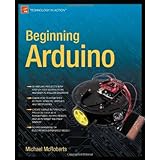
Beginning Arduino Review

Beginning Arduino
Average Reviews:

(More customer reviews)
Are you looking to buy Beginning Arduino? Here is the right place to find the great deals. we can offer discounts of up to 90% on Beginning Arduino. Check out the link below:

>> Click Here to See Compare Prices and Get the Best Offers

Beginning Arduino ReviewFinally, somebody got it right! I have to agree with Mr. Young and Mr. Laefsky's reviews, but feel that I should add just a bit more.
There are plenty of books out there on Arduino and I own or have examined most of them, so I thought my Arduino Library was full. I was wrong, this one was under the tree for Christmas and it's definitely a keeper. I read the book all the way through and then I started working through the activities early yesterday morning. Having now completed the projects through Chapter 3, I feel competent to review it.
The bottom line is that if you are starting out with Arduino and have been trying to piece together your skills from web tutorials and a few of the popular books, but have felt either out of your depth reading Making Things Talk: Practical Methods for Connecting Physical Objects, or that the material in, for example Getting Started with Arduino (Make: Projects) is too basic, this is the book that will vault you to the next level.
Books and tutorials on Arduino generally seem to trend toward two extremes:
On the one hand there is the "box of crayons" approach- tutorials (see practically every website of every vendor that sells Arduino and variants) that give very short and specific instructions on how to wire one or two components to Arduino and interact with them via a brief, illustrative, but not especially useful code example. These examples are intended, I guess, to give the reader some general ideas of the creative uses for Arduino, and the code snippets and discrete components are treated individually like crayons in the box of 64, with little guidance as to how they can be combined and blended together to make amazing and wonderful creations, or why you might choose one method of blinking an LED over another.
On the other hand, there is the pet project approach. These present someone's grand idea for a complex interactive project, usually costly, usually inspirational, but usually ill suited as a learning platform. You indeed can learn a tremendous amount by following along and building the projects in, for example, Practical Arduino: Cool Projects for Open Source Hardware (Technology in Action), and I did. But unless you actually WANT an internet connected, GPS enabled, refrigerator monitor (I'm making that up), you will end up spending a lot of extra time and money to nail down the knowledge to design your data logging cell phone seeker robot (I'm making that up too).
Beginning Arduino takes a third path. The projects are designed to be wired up on a breadboard with mostly reusable, reasonably priced components. You will not end up soldering something together only to realize that you are going to have to buy another one for the next phase in your learning. Each project is a bit more complex than the one preceding, but in each case the code and the hardware added push off into new areas and new uses. Once you complete a particular project, and the suggested exercises, you have a clear understanding of how the new component works and what you can do with the new code you learned. For me this lead to a much clearer understanding of how I could approach the challenges in my own pet project.
Before I started reading and working through Beginning Arduino, I had about decided that I would never grok C programming, feel comfortable with Arduino, or meet my ultimate goal of embedding Atmel chips in a variety projects floating around in my imagination. But over the past few days my enthusiasm and confidence have returned and I thank Mr. McRoberts for that.
One final note, while there are a few minor typographical errors, I can report that so far there has not been a single error that has interfered with the completion of a functional project. This is, in my experience, rare in a book with such technical depth. I applaud Mr. McRoberts and his technical reviewer, Josh Adams for such a fine job.Beginning Arduino Overview
In Beginning Arduino, you will learn all about the popular Arduino microcontroller by working your way through an amazing set of 50 cool projects. You'll progress from a complete beginner regarding Arduino programming and electronics knowledge to intermediate skills and the confidence to create your own amazing Arduino projects. Absolutely no experience in programming or electronics required! Rather than requiring you to wade through pages of theory before you start making things, this book has a handson approach. You will dive into making projects right from the start, learning how to use various electronic components and how to program the Arduino to control or communicate with those components. Each project is designed to build upon the knowledge learned in earlier projects and to further your knowledge in programming as well as skills with electronics. By the end of the book you will be able create your own projects confidently and with creativity.

What you'll learn
Controlling LEDs
Displaying text and graphics on LCD displays
Making a line-following robot
Using touch screens
Using digital pressure sensors
Reading and writing data to SD cards
Connecting your Arduino to the Internet

Who this book is for
Electronics enthusiasts who are new to the Arduino as well as artists and hobbyists who want to learnthis very popular platform for physical computing and electronic art.

Table of Contents
Introduction
Light 'Em Up
LED Effects
Simple Sounders and Sensors
Driving a DC Motor
Binary Counters
LED Displays
Liquid Crystal Displays
Servos
Steppers and Robots
Pressure Sensors
Touch Screens
Temperature Sensors
Ultrasonic Rangefinders
Reading and Writing to an SD Card
Making an RFID Reader
Communicating over Ethernet


Want to learn more information about Beginning Arduino?

>> Click Here to See All Customer Reviews & Ratings Now
Read More...

Analog Circuit Design: Art, Science and Personalities (EDN Series for Design Engineers) Review

Analog Circuit Design: Art, Science and Personalities (EDN Series for Design Engineers)
Average Reviews:

(More customer reviews)
Are you looking to buy Analog Circuit Design: Art, Science and Personalities (EDN Series for Design Engineers)? Here is the right place to find the great deals. we can offer discounts of up to 90% on Analog Circuit Design: Art, Science and Personalities (EDN Series for Design Engineers). Check out the link below:

>> Click Here to See Compare Prices and Get the Best Offers

Analog Circuit Design: Art, Science and Personalities (EDN Series for Design Engineers) ReviewAnalysis is a science: there's a right answer out there, and we can all agree when it's found. Troubleshooting is the same way: when the broken bit is found and fixed, the circuit starts working properly.
Design, on the other hand, is an art; there's always more than one way to do it, and the individuality of the designer has a strong influence on the way the design turns out: hence "Art, Science, and Personalities".
This isn't to say that a good designer does unusual things without a good reason, or adds expensive bells and whistles because he happens to like them. What it means is that for designs that are not routine, the designer's personality has a lot to do with how it comes out.
To become an expert designer, you need a well-developed technical taste. Once you have a design that works at some level, it's that sour feeling in the back of your mouth that will tell you that it isn't right yet, that it can be simpler, cheaper, or more reliable. There aren't a lot of other sources of that information.
Arts are taught by apprenticeship. But where are you going to go to get taught this stuff nowadays? EE departments are going more and more to software, as shown by the vast number of graduate EEs who don't know which end of a soldering iron to hold. Jim Williams can't be everybody's mentor, but in this informal (and sometimes whimsical) book, he and his friends show us how the best analogue designers in the business go about things. You know what? One of the most important elements in the art of design is *play*.
Maybe listening in on these guys playing at being analogue designers isn't quite the same as sitting elbow-to-elbow with them, but it's as close as most of us are going to get, and it's terrifically valuable. I recommend this book to anyone who wants to become a better analogue designer, and who is not easily put off by whimsy in technical writing. (I find it refreshing and fun, myself.) I've owned this book for 6 or 7 years, and it's about ready to fall apart from rereading.Analog Circuit Design: Art, Science and Personalities (EDN Series for Design Engineers) OverviewThis book is far more than just another tutorial or reference guide - it's a tour through the world of analog design, combining theory and applications with the philosophies behind the design process. Readers will learn how leading analog circuit designers approach problems and how they think about solutions to those problems. They'll also learn about the `analog way' - a broad, flexible method of thinking about analog design tasks.A comprehensive and useful guide to analog theory and applications. Covers visualizing the operation of analog circuits. Looks at how to rapidly determine workable approximations of analog circuit parameters.

Want to learn more information about Analog Circuit Design: Art, Science and Personalities (EDN Series for Design Engineers)?

>> Click Here to See All Customer Reviews & Ratings Now
Read More...

30 Arduino Projects for the Evil Genius Review

30 Arduino Projects for the Evil Genius
Average Reviews:

(More customer reviews)
Are you looking to buy 30 Arduino Projects for the Evil Genius? Here is the right place to find the great deals. we can offer discounts of up to 90% on 30 Arduino Projects for the Evil Genius. Check out the link below:

>> Click Here to See Compare Prices and Get the Best Offers

30 Arduino Projects for the Evil Genius ReviewSimon Monk provides Arduino newbies a guide that goes way beyond "Getting Started With Arduino", yet deals with the subject in an easy to read, accessible format. His projects are also far more practical eg he deals with flashing a simple led (like every other Arduino text) but then scales this up to high power Luxeon leds in various different applications but based on similar circuitry. This lead me to adapting one of his circuits to a real-world interest of mine, involving led lamps.
I look forward to a sequel where he might take us into the (so far) murky world of timers and interrupts, an area not covered very well (yet) in the Arduino world.30 Arduino Projects for the Evil Genius Overview
30 Ways to Have Some Computer-Controlled Evil Fun!
This wickedly inventive guide shows you how to program and build a variety of projects with the Arduino microcontroller development system. Covering Windows, Mac, and Linux platforms, 30 Arduino Projects for the Evil Genius gets you up to speed with the simplified C programming you need to know--no prior programming experience necessary.
Using easy-to-find components and equipment, this do-it-yourself book explains how to attach an Arduino board to your computer, program it, and connect electronics to it to create fiendishly fun projects. The only limit is your imagination!
30 Arduino Projects for the Evil Genius:
Features step-by-step instructions and helpful illustrations
Provides full schematic and construction details for every project
Covers the scientific principles behind the projects
Removes the frustration factor--all required parts are listed along with sources

Build these and other devious devices:
Morse code translator
High-powered strobe light
Seasonal affective disorder light
LED dice
Keypad security code
Pulse rate monitor
USB temperature logger
Oscilloscope
Light harp
LCD thermostat
Computer-controlled fan
Hypnotizer
Servo-controlled laser
Lie detector
Magnetic door lock
Infrared remote

Each fun, inexpensive Evil Genius project includes a detailed list of materials, sources for parts, schematics, and lots of clear, well-illustrated instructions for easy assembly. The larger workbook-style layout and convenient two-column format make following the step-by-step instructions a breeze.
Make Great Stuff!TAB, an imprint of McGraw-Hill Professional, is a leading publisher of DIY technology books for makers, hackers, and electronics hobbyists.

Want to learn more information about 30 Arduino Projects for the Evil Genius?

>> Click Here to See All Customer Reviews & Ratings Now
Read More...

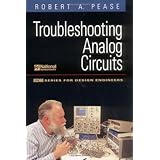
Troubleshooting Analog Circuits (EDN Series for Design Engineers) Review

Troubleshooting Analog Circuits (EDN Series for Design Engineers)
Average Reviews:

(More customer reviews)
Are you looking to buy Troubleshooting Analog Circuits (EDN Series for Design Engineers)? Here is the right place to find the great deals. we can offer discounts of up to 90% on Troubleshooting Analog Circuits (EDN Series for Design Engineers). Check out the link below:

>> Click Here to See Compare Prices and Get the Best Offers

Troubleshooting Analog Circuits (EDN Series for Design Engineers) ReviewAs a self-educated analog electronics designer and manufacturer, this is the book I use and recommend most. Everything in it is true. Everything in it is useful. Every page reminds you that the best test instrument is you brain. "Inspirational stuff" indeed!Troubleshooting Analog Circuits (EDN Series for Design Engineers) OverviewBased on the author's popular series in EDN Magazine, the book contains a wealth of information on debugging and troubleshooting analog circuits.In this book, you'll find advice on using simple equipment to troubleshoot (would you believe an ordinary AM radio?); step-by-step procedures for analog troubleshooting methods; and generous helpings of the author's unique insights, humor, and philosophy on analog circuits.*Provides proven methods for troubleshooting analog circuits

Want to learn more information about Troubleshooting Analog Circuits (EDN Series for Design Engineers)?

>> Click Here to See All Customer Reviews & Ratings Now
Read More...

Programming 16-Bit PIC Microcontrollers in C: Learning to Fly the PIC 24 (Embedded Technology) Review

Programming 16-Bit PIC Microcontrollers in C: Learning to Fly the PIC 24 (Embedded Technology)
Average Reviews:

(More customer reviews)
Are you looking to buy Programming 16-Bit PIC Microcontrollers in C: Learning to Fly the PIC 24 (Embedded Technology)? Here is the right place to find the great deals. we can offer discounts of up to 90% on Programming 16-Bit PIC Microcontrollers in C: Learning to Fly the PIC 24 (Embedded Technology). Check out the link below:

>> Click Here to See Compare Prices and Get the Best Offers

Programming 16-Bit PIC Microcontrollers in C: Learning to Fly the PIC 24 (Embedded Technology) ReviewThere are many books published on how to program or use Microchip's PIC product in various application categories. For networking, Fred Eady's, "Networking and Internetworking With Microcontrollers", ISBN 0-7506-7698, Keith Curtis, "Embedded Multitasking", ISBN 0-7506-7918-2, and Creed Huddleston's, "Intelligent Sensor Design", ISBN 0-7506-7755-4, are but 3 of my favorites (there are more). This book is a deserving the serious PIC programmer's attention; that is, if you want to really use the PIC24 or dsPIC. This book does not is not written for the dsPIC, but the architecture is similar enough that, aside from the DSP engine, you can learn almost all of the non-DSP features of the dsPIC (save for a select few dsPIC features).
Lucio has managed to put together a real interesting collection of material to help you learn the PIC24 and in a fun way. Lucio's theme is "Learning to Fly the PIC24". The book addresses primarily C developers, with plenty of example code. Assembly programmers are not left out, however as the format of each chapter is: a flight plan, the flight, post flight briefing, and notes for PIC experts, and assembly language experts. Lucio is a PIC expert at Microchip so you will learn from the best. The book includes a CD-ROM with source code in C and the student version of the C30 compiler. The book is not written for "absolute" beginners. Some familiarity with assembly language and basic understanding of the C language. Prior exposure to the PIC architecture would be helpfull as well.
Part I is about the basics of the PIC24. Chapter 1 takes you through the basics of programming the PIC24; Compiling, linking, building a project, port initialization, and other tips and tricks. Chapter 2 introduces logic operators, while loops, timers and, a neat feature of Microchips MPLAB, the logic analyzer. Chapter 3 introduces do loops, variable declarations, and arrays. Chapter 4 discusses data types, optimization, testing, integer multiplication, and complex data types. Chapter 5 is covers interrupts, the secondary oscillator, and the real-time clock calendar (RTCC), Chapter 6 discusses memory allocation, the program space visibility (PSV), the compiler map, pointers, the heap, and C30 memory models.
Part II, chapter 7 takes you through he serial interface , parallel interface, SPI, read status register, writing to the EEPROM and the new nonvolatile storage library using the 25LC245 serial EEPROM. Chapter 8 is about more UART examples and a console library. Chapter 9 presents interfacing with the LCD using the HD44780 controller. Chapter 9 is about analog-to-digital conversion with a good example of using the TC1047 analog temperature measurement chip.
Part III is more advance material. Chapter 11 covers input capture, simulation, PS/2 interfacing (including key code decoding), and I/O polling. Chapter 12 is really cool and discusses techniques to interface to a TV screen or display using composite video. Chapter 13 is about mass storage using the SD/MMC card interface. Chapter 14 discusses file I/O, the file allocation table (FAT), the fopenM() and freadM() functions. Chapter 15 is the grand finale using the PIC24 OC modules to develop a WAVE file player using PWM output.
The reason I summarized the chapters, in detail, above is that the chapter titles do not do the chapter contents justice in title alone. The chapters are:
1. The first flight
2. A loop in the Pattern
3. More Pattern Work, More Loops
4. Numbers
5. Interrupts
6. Taking a Look Under the Hood
7. Communication
8. Asynchronous Communications
9. Glass Bliss
10. It's an Analog World
11. Capturing Inputs
12. The Dark Screen
13. Mass Storage
14. File I/O
15. VolareProgramming 16-Bit PIC Microcontrollers in C: Learning to Fly the PIC 24 (Embedded Technology) Overview

Want to learn more information about Programming 16-Bit PIC Microcontrollers in C: Learning to Fly the PIC 24 (Embedded Technology)?

>> Click Here to See All Customer Reviews & Ratings Now
Read More...

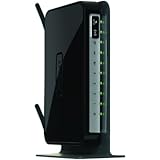
Netgear DGN2200 Refurbished Wireless-N N300 Router with Built-In DSL Modem (DGN2200-100NAR) Review

Netgear DGN2200 Refurbished Wireless-N N300 Router with Built-In DSL Modem (DGN2200-100NAR)
Average Reviews:

(More customer reviews)
Are you looking to buy Netgear DGN2200 Refurbished Wireless-N N300 Router with Built-In DSL Modem (DGN2200-100NAR)? Here is the right place to find the great deals. we can offer discounts of up to 90% on Netgear DGN2200 Refurbished Wireless-N N300 Router with Built-In DSL Modem (DGN2200-100NAR). Check out the link below:

>> Click Here to See Compare Prices and Get the Best Offers

Netgear DGN2200 Refurbished Wireless-N N300 Router with Built-In DSL Modem (DGN2200-100NAR) ReviewI was sold this unit a local retailer as my ATT gateway broke. Had to call the help line to get the thing set up. Helpline very helpful and I was up and running in ... days. Apparently, you have to reset every wireless device you have in the house even though you keep your same wireless codes. But the unit worked absolutely great for a few weeks. Then we noticed it getting hot. To hot to hold in your hand. Once that happens, the network performance drops like a rock. I ran network tests and it showed the network access dropping from 5.0Mb to 0.5Mb. The only way to fix it temporarily is to unplug it and let it cool. After an hour, the problem is back. I checked the forums and the problems I experienced are very similar to the DGN2000 posted on Netgears forums.
While it is great when it works, I can not recommend this product.Netgear DGN2200 Refurbished Wireless-N N300 Router with Built-In DSL Modem (DGN2200-100NAR) Overview

Want to learn more information about Netgear DGN2200 Refurbished Wireless-N N300 Router with Built-In DSL Modem (DGN2200-100NAR)?

>> Click Here to See All Customer Reviews & Ratings Now
Read More...

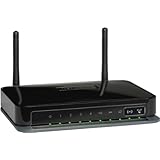
Netgear N300 Wireless ADSL2+ Modem Router (DGN2200) Review

Netgear N300 Wireless ADSL2+ Modem Router (DGN2200)
Average Reviews:

(More customer reviews)
Are you looking to buy Netgear N300 Wireless ADSL2+ Modem Router (DGN2200)? Here is the right place to find the great deals. we can offer discounts of up to 90% on Netgear N300 Wireless ADSL2+ Modem Router (DGN2200). Check out the link below:

>> Click Here to See Compare Prices and Get the Best Offers

Netgear N300 Wireless ADSL2+ Modem Router (DGN2200) ReviewAfter doing a lot of study about available options, I decided on the DGN2200 DSL modem. In short, this product is everything it promises to be.
I experienced no problems whatsoever from the moment I took the unit out of the box. Setup was easy and the product worked flawlessly from the start. The speed and coverage is impressive and it is a noticeable jump in performance compared to my previous router with 802.11g wireless. The 802.11n is a huge jump in performance and coverage and my wife "can't believe" how fast our DSL service is.
I did have to call Netgear once to ask how to set up a DSL modem with an ISP who didn't use PPPoe login and password; they were extremely helpful and the wait time on hold was less than 30 seconds. All in all, setup was a snap.
I also set up a USB network drive for backups and the ability to connect a shared drive on the network is a big plus.
If you're looking for a nice bump in performance, especially as it relates to wireless connections, this wireless modem is a great choice.Netgear N300 Wireless ADSL2+ Modem Router (DGN2200) Overview

Want to learn more information about Netgear N300 Wireless ADSL2+ Modem Router (DGN2200)?

>> Click Here to See All Customer Reviews & Ratings Now
Read More...

10LANG Pacifica Talking Transl Review

10LANG Pacifica Talking Transl
Average Reviews:

(More customer reviews)
Are you looking to buy 10LANG Pacifica Talking Transl? Here is the right place to find the great deals. we can offer discounts of up to 90% on 10LANG Pacifica Talking Transl. Check out the link below:

>> Click Here to See Compare Prices and Get the Best Offers

10LANG Pacifica Talking Transl ReviewI own a franklin translator but wanted to know how to say the words so I purchased this translator. The audio for this translator is HORRIBLE, and some of the translations were not correct! After 5 minutes of playing with this translator I was on the phone getting a return code so I could send it back. So please whatever you do, DO NOT BUY THIS TRANSLATOR!!! I wouldnt pay $10 for it! It's garbage.10LANG Pacifica Talking Transl Overview

Want to learn more information about 10LANG Pacifica Talking Transl?

>> Click Here to See All Customer Reviews & Ratings Now
Read More...

Cyber Acoustics AC-850 Internet Communication USB Stereo Headset and Boom Mic (Black) Review

Cyber Acoustics AC-850 Internet Communication USB Stereo Headset and Boom Mic (Black)
Average Reviews:

(More customer reviews)
Are you looking to buy Cyber Acoustics AC-850 Internet Communication USB Stereo Headset and Boom Mic (Black)? Here is the right place to find the great deals. we can offer discounts of up to 90% on Cyber Acoustics AC-850 Internet Communication USB Stereo Headset and Boom Mic (Black). Check out the link below:

>> Click Here to See Compare Prices and Get the Best Offers

Cyber Acoustics AC-850 Internet Communication USB Stereo Headset and Boom Mic (Black) ReviewI don't know if it's all USB headsets or just this one but it has a couple of really good points:
First of all you have the ability (in your Control Panel under Sounds and Audio Devices) to set up your sound were anything using voice recording or playback exclusively uses your headset where as all other sounds go through your main speakers and any recordings you'd like to make can still be done through your other microphone without having to change settings every time you'd like to make an internet call or voice chat.
Next the audio quality and mike response is not exceptional but it's still really good. The noise cancelling works well and allows you to talk without completely muting your voice.
Over all its pretty solid and I'd recommend it to anyone over a headset you have to plug into your sound cards audio out and mike jacks.
Cyber Acoustics AC-850 Internet Communication USB Stereo Headset and Boom Mic (Black) OverviewSlick, comfortable, and awesome quality, the AC-850 USB stereo headset is a great choice for anyone doing Voice Over iP and gaming. Bring your ears to attention with the AC-850's 30mm dynamic drivers. The adjustable, over the head design fits comfortably on any head size, and the flexible, noise-canceling boom mic's 180-degree rotation gets the job done, no matter your preference. The in-line volume control and mute switch are conveniently located within reach, and comfort is no issue with the AC-850's soft, leatherette ear pads. Listen to crystal clear USB digital audio in style.

Want to learn more information about Cyber Acoustics AC-850 Internet Communication USB Stereo Headset and Boom Mic (Black)?

>> Click Here to See All Customer Reviews & Ratings Now
Read More...