Average Reviews:

(More customer reviews)Are you looking to buy
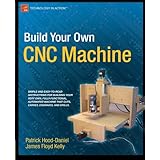
Build Your Own CNC Machine (Technology in Action)? Here is the right place to find the great deals. we can offer
discounts of up to 90% on
Build Your Own CNC Machine (Technology in Action). Check out the link below:
>> Click Here to See Compare Prices and Get the Best Offers
Build Your Own CNC Machine (Technology in Action) ReviewI got my copy of the book today. I've spent maybe a half hour skimming the book, and my initial impression is that it is very thorough and complete. It goes through the basics of why / how the linear bearings will work, how to cut and drill the MDF, etc. Even a novice, that had only minimal experience with simple power tools could understand and follow these directions to completion.
Everything seems to be very well documented, and is supported by many photos, schematics, and drawings. The photos are clear, even though they are black and white. The color versions of most of the photos are even on the website, if you need them, as are some videos.
Each chapter includes some nice quick-glance features, like a "Summary of Work" and a list of what MDF parts you'll be working on next. This is a nice addition, to help "ground" what you're doing, and keep you understanding what is going on.
The second chapter, titled "Hardware and Tools" is going to help a lot of people, I think, because it sets an understanding for what tools the author assumes you will have access to, and skill using. The requirements are not much cause for concern, since they are all simple power tools you can pick up at almost any hardware store. One thing that I would liked to have seen, would be more specific listings of some of the tools. For instance, almost every hole in the machine is either 1/4", 7/16", 3/8", or 3/4". It probably wouldn't have been to hard to give a specific list of all the drillbits used during construction if you follow the book to the letter. However, it still says you need drill bits, of course, so a little reading will quickly let you figure out which ones.
One final thing I want to point out is that, as far as I can tell, there is no special hardware (besides the electronics) that are required. You can buy everything off the shelf, at pretty much any local hardware retailer (Lowes, Home Depot, True Value, etc.). This is great, and in stark contrast to some other stuff out there (like this book, read the reviews, http://www.amazon.com/CNC-Robotics-Build-Your-Workshop/dp/0071418288/ ) that requires special parts, or hopes you can find the same "suprlus"/recycled items that the author used.
I can't wait to get started! (And I'll be sure to let everyone know how it goes.)
--------UPDATE--------UPDATE---------
I just finished reading the book, and I think it very much lives up to it's purpose. With only common hand and power tools, you can build yourself an affordable CNC router.
The book is about 200 pages, but it's easy reading. It goes very quickly because almost every page is 1/2 covered by pictures, diagrams, or plans.
You should DEFINATELY read the whole book before you do anything. It's as much of a learning journey along with the author, as it is an instruction manual for getting the job done. Because of this, you read about and discover things as the author discovered them in the process. This makes it a bit backwards, as far as a manual goes, because the best way to do something is not always given up front. For instance, it is suggested in chapter 15 that you test drilling holes in scrap wood to figure out just how deeply you have to go in order to submerge the bolts below the surface, despite the fact that you've been drilling counterbored holes for this reason since chapter 8. Also, some of the dimesions in the plans are not real, and you are expected to replace them with more exact dimensions of your machine parts, as you created them, for a more appropriate fit. However, this should in no way discourage you from reading this great book. Just do so before you try to build the machine.
It's a great book, and I highly recommend it. I'll post a new update after I get my machine built.
--------UPDATE #2--------UPDATE #2---------
I decided to see exactly how much it would cost to build. I tried to find deals, or reasonably good prices, on all the pieces. The bare minimum for the machine, including router and a couple bits, is about $800. You will probably also need $100+ dollars worth of tools, unless you have some of the required odd ones already (1-1/8" forstner bit, 45-degree chamfer router bit, 5/16" tap, etc.). The computer needed to run it is not very powerful, but unless you can get a good used one from someone, expect to drop another $200-300. So all total, this is realistically a $1000-1500 project. (I kept track of accurate costs, but provided generalizations here.)
I have a final thought on the perspective of the book. When you read it, consider it a written documentary about someone building the machine, not an instruction manual for building it. There are lots of subtle things left out, but a competent person can figure them out. If you take this attitude towards it, you will save yourself frustration when you run into inconsistencies, errors, or omissions. I still fully recommend the book, and it will give you a great entry into CNC, but the role of the book has caused some people grief.
Build Your Own CNC Machine (Technology in Action) OverviewBuild Your Own CNC Machine is a groundbreaking book targeted at the growing number of hobbyists wanting to fabricate wood and metal parts of their own design in their home workshops. Lead author Patrick Hood-Daniel is creator of buildyourcnc.com and is well-known for his affordable, easy-to-build designs for home CNC machines. His videos on CNC machines are watched by tens of thousands of hobbyists. Each one of those viewers, and each of his website visitors represents a potential sale of this book.The interest in hobbyist-level CNC machines is real and growing. In addition to the author's own site, a Google search on "cnc for the home" will turn up many other sites dedicated to this new market, including solsylva.com, homecnc.info, cnczone.com, hobbycnc.com, ktmarketing.com/CNC.html, and more. Articles about CNC for them home can be found on Make Magazine's website (makezine.com), and at Engadget.com. CNC technology is becoming affordable for the average person, and the many creative people who like to design and build things are taking notice and jumping onto the CNC bandwagon.
Want to learn more information about
Build Your Own CNC Machine (Technology in Action)?
>> Click Here to See All Customer Reviews & Ratings Now