Showing posts with label databases. Show all posts

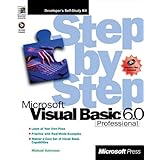
Microsoft Visual Basic Professional 6.0 Step by Step (Step by Step (Microsoft)) Review

Microsoft  Visual Basic   Professional 6.0 Step by Step (Step by Step (Microsoft))
Average Reviews:

(More customer reviews)
Are you looking to buy Microsoft Visual Basic Professional 6.0 Step by Step (Step by Step (Microsoft))? Here is the right place to find the great deals. we can offer discounts of up to 90% on Microsoft Visual Basic Professional 6.0 Step by Step (Step by Step (Microsoft)). Check out the link below:

>> Click Here to See Compare Prices and Get the Best Offers

Microsoft Visual Basic Professional 6.0 Step by Step (Step by Step (Microsoft)) ReviewLet me state that I have been through many, many books on how to learn Visual Basic 6.0. I've done the Dummies Book, the Sams 21 Day and 24 hour route, and the John Smiley 'By examples' book, and lastly the Peter Norton VB book. I've spent some serious money on books and Im still a rookie programmer (ok, so Im modest...).
Since I started with the Dummies book, it gave me the basics of how and why VB works. But, what I found it lacking was any real examples to play with. The Sams books were redundant of the dummies guides. And the Peter Norton book was just pathetic. It would bore a Vulcan to sleep. I can't tell you how many times I caught myself reading the same paragraph over and over to try to capture the meaning. The book by John Smiley was fantastic, but his follow up one, the "By Examples", had a Talk Show tone that left me confused. The book just had too much going on asides VB...and after a chapter or two, I just couldnt take it any longer (the book is now a lovely speaker holder).
Enough on those. To you that have tried a book or two and are thirsty for a book that will bring you across the finish line, this is it. No, this is not an ideal first book for the newbie. But, if you understand a wee bit about VB, this book will pick you up and carry you though. The examples (and there are lots) are the heart of each lesson. Most books are very wordy and defining the process, then an example. Not this one. This guy must have pilot blood in him. You get a heads up of what you are going to do, make an example and try it out, then after you've "landed", the author discusses with you what you just did, the dynamics, and how to go a step beyond. Ok, this is getting really wordy, so let me wrap up here....Im not a good reader...I get distracted too easy. I found myself able to get absorbed into this book and LEARN. Its concise and to the point. So, to those of you that didnt like the book, well...perhaps you like those War & peace sized ones...or like books that read like Latin 101 and put anyone that dares read over your shoulder to sleep. Good book, good examples...I tended to stay away from the Microsoft Press books since they were much more expensive then the other entry-level guides. Not any more...looking forwad to his next book on the next version of VB
Thanks for allowing me to commentMicrosoft Visual Basic Professional 6.0 Step by Step (Step by Step (Microsoft)) Overview
This information-packed Step by Step course is the easiest and fastest way to teach yourself to write 32-bit Microsoft Windows®–based programs using the latest version of Microsoft Visual Basic. Work through every lesson to complete the full course, or do individual lessons to learn just the skills you need. Either way, you gain the skills you need at your own pace.

With MICROSOFT VISUAL BASIC PROFESSIONAL 6.0 STEP BY STEP, you'll learn to:

Work with ActiveX® controls, compiler options,and the new development tools
Master programming fundamentals, including variables, decision structures, loops, and functions
Create custom dialog boxes, clocks, menus, and animation effects
Manage text files and use encryption and sorting algorithms
Use Automation to integrate Microsoft Excel, Microsoft Word, and Microsoft Outlook™ features into your applications
Explore Professional Edition ActiveX controls that process RTF files, run videos, display progress information, and play audio CD-ROMs
Call the memory management functions in the Windows API
Download FTP and HTML files from the Internet and design DHTML pages
Exploit corporate data resources with advanced database tools and the new ActiveX Data Objects

A Note Regarding the CD or DVD

The print version of this book ships with a CD or DVD. For those customers purchasing one of the digital formats in which this book is available, we are pleased to offer the CD/DVD content as a free download via O'Reilly Media's Digital Distribution services. To download this content, please visit O'Reilly's web site, search for the title of this book to find its catalog page, and click on the link below the cover image (Examples, Companion Content, or Practice Files). Note that while we provide as much of the media content as we are able via free download, we are sometimes limited by licensing restrictions. Please direct any questions or concerns to booktech@oreilly.com.


Want to learn more information about Microsoft Visual Basic Professional 6.0 Step by Step (Step by Step (Microsoft))?

>> Click Here to See All Customer Reviews & Ratings Now
Read More...

Performance Tuning with SQL Server Dynamic Management Views (High Performance Sql Server) Review

Performance Tuning with SQL Server Dynamic Management Views (High Performance Sql Server)
Average Reviews:

(More customer reviews)
Are you looking to buy Performance Tuning with SQL Server Dynamic Management Views (High Performance Sql Server)? Here is the right place to find the great deals. we can offer discounts of up to 90% on Performance Tuning with SQL Server Dynamic Management Views (High Performance Sql Server). Check out the link below:

>> Click Here to See Compare Prices and Get the Best Offers

Performance Tuning with SQL Server Dynamic Management Views (High Performance Sql Server) ReviewYou know those technical manuals that sit on your desk, slowly collecting little post-it tabs with notes on them, the spines are cracked, the covers are wrinkled, when people come to borrow them you snatch it from their hands? You know those books? Yeah, well, this is one of them. I've only owned it for a few days, but I've already opened it several times to look stuff up, even stuff I had just finished reading.
I really like the approach the authors, Louis Davidson & Tim Ford, took to the book. Instead of just laying out a bunch of Dynamic Management Objects (DMO) in alphabetical order or something, they focused on the DMOs associated with Performance Tuning. Then, they took the trouble to break the DMOs apart into different areas of data and performance metrics like "Query Plan MetaData" and "Transactions." They introduced each topic with an overview of the topic, why DMOs are useful to gathering data on that topic and then dived into which DMO did what to help you with the information you need to do performance tuning on your system.
The writing is very clear and to the point. Also, I wasn't able to detect different "voices" as I read through the book. Despite more than one author, there's not that disjointed feeling you can get as you hop from one chapter to another and switch authors at the same time. I really liked the sample queries and the way they built on each other, showing you the true strength available in DMOs, which is combining them to put together extremely useful views on the data in the system. I also liked the fonts used and the layout of the book, the way important code was called out through bolding & font changes. I did think that the screen captures were a bit fuzzy, but not to the degree that it detracted from the book in any way.
The argument can be made that books like this just rewrite the Books Online (BOL). But, in addition to extremely clear explanations, and a focused methodology showing you not just how to use the DMOs but where and why to use the DMOs, you also get the unique code samples. The thing about DMOs is that in isolation, they're useful. But it's in combination that they become powerful. The examples emphasize how these building blocks can be put together to create new, interesting and useful reports. Examples such as these are just not available in BOL.
For all these reasons, I highly recommend this book. If you're responsible for maintaining or developing SQL Server systems, you'll find something useful in this book that you can put to work, right away.Performance Tuning with SQL Server Dynamic Management Views (High Performance Sql Server) OverviewDynamic Management Views (DMVs) are a significant and valuable addition to the DBA's troubleshooting armory, laying bare previously unavailable information regarding the under-the-covers activity of your database sessions and transactions.Why, then, aren't all DBAs using them? Why do many DBAs continue to ignore them in favour of "tried and trusted" tools such as sp_who2, DBCC OPENTRAN, and so on, or make do with the "ready made" reports built into SSMS? Why do even those that do use the DMVs speak wistfully about "good old sysprocesses"?There seem to be two main factors at work. Firstly, some DBAs are simply unaware of the depth and breadth of the information that is available from the DMvs, or how it might help them troubleshoot common issues. This book investigates all of the DMVs that are most frequently useful to the DBA in investigating query execution, index usage, session and transaction activity, disk IO, and how SQL Server is using or abusing the operating system.Secondly, the DMVs have a reputation of being difficult to use. In the process of exposing as much useful data as possible, sysprocesses has been de-normalized, and many new views and columns have been added. This fact, coupled with the initially-baffling choices of what columns will be exposed where, has lead to some DBAs to liken querying DMVs to "collecting mystic spells".In fact, however, once you start to write your own scripts, you'll see the same tricks, and similar join patterns, being used time and again. As such, a relatively small core set of scripts can be readily adapted to suit any requirement. This book is here to de-mystify the process of collecting the information you need to troubleshoot SQL Server problems. It will highlight the core techniques and "patterns" that you need to master, and will provide a core set of scripts that you can use and adapt for your own systems, including how to:* Root out the queries that are causing memory or CPU pressure on your system* Investigate caching, and query plan reuse* Identify index usage patterns* Track fragmentation in clustered indexes and heaps* Get full details on blocking and blocked transactions, including the exact commands being executed, and by whom.* Find out where SQL Server is spending time waiting for resources to be released, before proceeding* Monitor usage and growth of tempdbThe DMVs don't make existing, built-in, performance tools obsolete. On the contrary, they complement these tools, and offer a flexibility, richness and granularity that are simply not available elsewhere. Furthermore, you don't need to master a new GUI, or a new language in order to use them; it's all done in a language all DBAs know and mostly love: T-SQL.

Want to learn more information about Performance Tuning with SQL Server Dynamic Management Views (High Performance Sql Server)?

>> Click Here to See All Customer Reviews & Ratings Now
Read More...

Microsoft SQL Server 2008 Management and Administration Review

Microsoft SQL Server 2008 Management and Administration
Average Reviews:

(More customer reviews)
Are you looking to buy Microsoft SQL Server 2008 Management and Administration? Here is the right place to find the great deals. we can offer discounts of up to 90% on Microsoft SQL Server 2008 Management and Administration. Check out the link below:

>> Click Here to See Compare Prices and Get the Best Offers

Microsoft SQL Server 2008 Management and Administration ReviewProduction database administrators have to know at least a little about a lot of things:
* How to install or upgrade SQL Servers
* How to build clusters
* How to plan for disaster recovery and high availability
* How to do performance tuning
* How to secure and protect databases
The production role revolves around management, not creation. Sure, they do need to know T-SQL and be able to debug problem code, but the majority of their day is making the trains run on time - not designing the seats inside the train cars.
Windows administrators who are forced into the SQL Server DBA role need this same type of information. They get handed a database server to manage, often with a database from a third party vendor like Citrix or Blackberry. They have to manage the server, make sure it performs as needed, and back it up safely - but they'll never touch a line of T-SQL code that runs on the server.
Ross Mistry and Hilary Cotter's book Microsoft SQL Server 2008 Management and Administration is a great companion for production DBAs and accidental DBAs. It covers this wide variety of topics in a good depth, and leaves topics like beginning T-SQL or how to write stored procedures out to other books.Microsoft SQL Server 2008 Management and Administration OverviewIf you need to deploy, manage, or secure Microsoft SQL Server 2008, this is the complete, fast-paced, task-based reference you've been searching for. Authored by a world-class expert on SQL Server in the enterprise, this book goes far beyond the basics, taking on the complex tasks that DBAs need to make the most of Microsoft's flagship database platform. SQL Server MVP, Ross Mistry presents proven techniques for SQL Server 2008 installation, upgrades, backup/restore, data transfer, indexing, high availability, security, and much more. He draws on extensive testing in high-profile production environments to offer step-by-step solutions and powerful tips you won't find anywhere else. Every chapter begins with a section identifying SQL Server 2008's most significant new improvements, and concludes with a convenient summary of best practices. Each chapter also outlines the benefits of leveraging Windows Server 2008.

Understand how to:
Master DBA tips, tricks, and best practices proven in actual enterprise environments

Want to learn more information about Microsoft SQL Server 2008 Management and Administration?

>> Click Here to See All Customer Reviews & Ratings Now
Read More...

Java Persistence with Hibernate Review

Java Persistence with Hibernate
Average Reviews:

(More customer reviews)
Are you looking to buy Java Persistence with Hibernate? Here is the right place to find the great deals. we can offer discounts of up to 90% on Java Persistence with Hibernate. Check out the link below:

>> Click Here to See Compare Prices and Get the Best Offers

Java Persistence with Hibernate ReviewI feel a little odd rating this thing as low as two stars. After all, it does pack a lot of information into its 800+ pages. And that does make it a single point of reference ... sort of.
It's when I actually tried to use this fat tome to learn how to work with Hibernate that I encountered the first problem. I can't recommend that approach. This book is a terrible way to learn how to use Hibernate. It talks endlessly about all kinds of detail about everything you might want to do, and even provides many incomplete code snippets. But surprisingly it doesn't sit you down and walk you through a simple application actually using Hibernate. The authors do provide a full-blown application you can download and work through - but that won't be easy, dear reader, and it will take you a while to distill the basics from the advanced usage.
This seems to be a problem with most Hibernate books, for some reason - they all think they need to explain ORM to the world rather than simply show how to create an application. Explaining ORM AND showing how to build an application might be better.
So, OK, perhaps, I thought, this will become my master reference. Then I encountered the second problem. There's no good way to drill quickly to a nugget of information you need, which, after all, is the essence of a reference. Instead you will have to read through the theoretical explanations and design discussions to figure out if the trail leads you to the specific nugget you need to get your software working.
In the end I realized that the book is not good as a tutorial and not good as a reference and I was left to wonder what it might be good for. This surprised me, to be honest.
As far as I am aware, no practical Hibernate book has been written, so it would be unfair to single out this one. (The Manning book, Hibernate Quickly, is simply incorrect at too many points - you have to figure out the coding and config errors.) So I'm not singling out this one. However, in my view the praise for this book is directed at the terrific work done by the authors in creating and maintaining Hibernate rather than their work on this book. Their work in this book is unfocused and, while comprehensive and correct, ultimately difficult to use for any practical purpose.
If you want to learn how to use Hibernate, the best way I know is to work with some of the tutorials available on the Web or to download an app server and follow their documentation. You might not learn about "theta-style joins", but you will certainly learn to use Hibernate to create software much more quickly that way than by using this book.Java Persistence with Hibernate Overview
Persistence-the ability of data to outlive an instance of a program-is central to modern applications.Hibernate, the most popular Java persistence tool, provides automatic and transparent object/relational mapping making it a snap to work with SQL databases in Java applications. Hibernate applications are cheaper, more portable, and more resilient to change. Because it conforms to the new EJB 3.0 and Java Persistence 1.0 standard, Hibernate allows the developer to seamlessly create efficient, scalable Java EE applications.

Java Persistence with Hibernate explores Hibernate by developing an application that ties together hundreds of individual examples. You'll immediately dig into the rich programming model of Hibernate 3.2 and Java Persistence, working through queries, fetching strategies, caching, transactions, conversations, and more. You'll also appreciate the well-illustrated discussion of best practices in database design, object/relational mapping, and optimization techniques.

In this revised edition of the bestselling Hibernate in Action, authors Christian Bauer and Gavin King-the founder of the Hibernate project-cover Hibernate 3.2 in detail along with the EJB 3.0 and Java Persistence standard.


Want to learn more information about Java Persistence with Hibernate?

>> Click Here to See All Customer Reviews & Ratings Now
Read More...

Head First SQL: Your Brain on SQL -- A Learner's Guide Review

Head First SQL: Your Brain on SQL -- A Learner's Guide
Average Reviews:

(More customer reviews)
Are you looking to buy Head First SQL: Your Brain on SQL -- A Learner's Guide? Here is the right place to find the great deals. we can offer discounts of up to 90% on Head First SQL: Your Brain on SQL -- A Learner's Guide. Check out the link below:

>> Click Here to See Compare Prices and Get the Best Offers

Head First SQL: Your Brain on SQL -- A Learner's Guide ReviewBefore I talk about Head First SQL, let me tell you about other database books I have used in the classroom. I teach an enterprise databases sequence (DBs I and II) at a tribal college in Montana. On the course evaluations for this sequence, students have a common complaint: "Liked the class. Hated the book.", "The book was painful to read.", "Please get a different book!"
Each year my colleagues and I are on the watch for a better, more engaging database book. We have tried three books over the past five years, but the difference between those books is like the difference between shades of grey. In the classroom, most of my time is spent mediating the daunting abstractness of those books or breaking down huge lumps of difficult technical material written in plodding and pedantic prose. This year a spot of color showed up: Head First SQL!

I discovered Head First SQL too late to use it as the primary text for my Fall quarter DBs class, but I liked it so much, I added it as an optional textbook for the quarter and told my students it would be the main textbook for the Winter quarter. I did so because the energy of the class was waning rapidly, and the book I had originally chosen was not helping. I needed to add some excitement to homework and lectures. Within two days of using Head First SQL, the classroom became a far more engaging environment.

I compiled this list for anyone interested in learning databases and SQL, especially anyone who teaches it.

Eleven Things I like about Head First SQL:

1. The book starts where my students start. The first questions my students have are questions of relevance: Why do I want to know this? What have I done before that's like this? What will this material add to my career and my life? Head First SQL starts by ushering the student through those questions: What is a database? Who cares about databases? What will a database do for me?

2. My students are able to read SQL, think SQL, and write SQL after the first chapter. Head First SQL starts students on the command-line, the same command-line professional database administrators use during 80-95% of their workday. My students start out with good command-line habits like using a DESCRIBE statement to view database structure and columns before writing a SELECT statement that references those columns.

3. The book invites my students to make mistakes and anticipates the most common mistakes I see students make. On quizzes, students who've dug into the book don't make those mistakes again.

4. The book's sequence of topics fits the way I teach and the way my students learn: queries come before design and theory. Head First SQL does not set out to be a comprehensive database design book, but it does an excellent job of immersing the learner in the critical thinking that goes into database design and table design strategy. I applaud Lynn Beighley and the Head First Team. They have laid an excellent foundation for the learner to smoothly transition into abstract database design concepts such as normalization, primary and foreign keys, entity-relationship diagrams (ERDs), and E.F. Codd's 12 principles of relational design.
5. Students don't read the book. They work the book. They play the book. They do the book.

6. Like Socrates, Head First SQL pushes my class and I to ask deeper questions about data, information, table design, normalization. Three different times during fall quarter, we had substantive arguments about which data types to use for certain columns. To hear my students using critical thinking and applying it to table design strategy is rewarding.

7. Like a guide, an outfitter, a trusted companion, HF SQL walks beside the student. The books I have used before talk down to students, talk over their heads, or just plain pontificate.

8. Theater in a database classroom? Yes. My students and I act out things like "Confessions of a NULL" -- fun, mysterious, memorable -- a great way to turn an abstract concept into a concrete and palpable one.

9. At conferences, committee meetings, training seminars, my colleagues and I talk about student engagement and the new "three Rs": rigor, relationships, and relevance. Using Head First SQL in my classroom changed my class noticeably, and I attribute that change to Head First's focus on those three Rs. My students started showing up early for class, spent more time in the lab outside of class, and performed far better on quizzes.
10. My quizzes and tests consist of sample tables and data. The open-ended questions on those tests ask students to write SQL to solve problems--a daunting task but the best way to assess whether students really "get" the concepts. In the past, students scores have ranged from 10% to 87%. A score of 92% was rare. A score of 95% almost unattainable. With Head First SQL, that range increased to between 70% and 98%. If that's not proof of Head First SQL's effectiveness, I don't know what is.

11. You will laugh your [body part here] off! And be warned: no matter what body part you substitute into the brackets, you will laugh several other body parts off as well.
I highly recommend this book to anyone teaching or learning SQL, relational database design, or MySQL.
Head First SQL: Your Brain on SQL -- A Learner's Guide Overview
Is your data dragging you down? Are your tables all tangled up? Well we've got the tools to teach you just how to wrangle your databases into submission. Using the latest research in neurobiology, cognitive science, and learning theory to craft a multi-sensory SQL learning experience, Head First SQL has a visually rich format designed for the way your brain works, not a text-heavy approach that puts you to sleep. Maybe you've written some simple SQL queries to interact with databases. But now you want more, you want to really dig into those databases and work with your data. Head First SQL will show you the fundamentals of SQL and how to really take advantage of it. We'll take you on a journey through the language, from basic INSERT statements and SELECT queries to hardcore database manipulation with indices, joins, and transactions. We all know "Data is Power" - but we'll show you how to have "Power over your Data". Expect to have fun, expect to learn, and expect to be querying, normalizing, and joining your data like a pro by the time you're finished reading!


Want to learn more information about Head First SQL: Your Brain on SQL -- A Learner's Guide?

>> Click Here to See All Customer Reviews & Ratings Now
Read More...

Oracle Database 11g PL/SQL Programming (Osborne ORACLE Press Series) Review

Oracle Database 11g PL/SQL Programming (Osborne ORACLE Press Series)
Average Reviews:

(More customer reviews)
Are you looking to buy Oracle Database 11g PL/SQL Programming (Osborne ORACLE Press Series)? Here is the right place to find the great deals. we can offer discounts of up to 90% on Oracle Database 11g PL/SQL Programming (Osborne ORACLE Press Series). Check out the link below:

>> Click Here to See Compare Prices and Get the Best Offers

Oracle Database 11g PL/SQL Programming (Osborne ORACLE Press Series) ReviewThis is one of the best technical books I have read. It makes PL/SQL easy to learn for the beginners and it is so detailed that very experienced users will find it extremely useful. It covers the usage of PL/SQL with many different types of applications such as JAVA, XML, PHP, etc. I have recommended very few language books in my time, because, I have found them to be written with the writer's logic as to how the writer thinks the code would be better executed. However this is the first book that I have seen that is written logically based on how the language would be better used to efficiently interact with the database. In short, I give this book my highest recommendation. I would like to congratulate Michael on writing such a great book.Oracle Database 11g PL/SQL Programming (Osborne ORACLE Press Series) OverviewDesign Feature-Rich PL/SQL Applications
Deliver dynamic, client/server PL/SQL applications with expert guidance from an Oracle programming professional. With full coverage of the latest features and tools, Oracle Database 11g PL/SQL Programming lays out each topic alongside detailed explanations, cut-and-paste syntax examples, and real-world case studies. Access and modify database information, construct powerful PL/SQL statements, execute effective queries, and deploy bulletproof security. You'll also learn how to implement C, C++, and Java procedures, Web-enable your database, cut development time, and optimize performance.

Create, debug, and manage Oracle-driven PL/SQL programs

Want to learn more information about Oracle Database 11g PL/SQL Programming (Osborne ORACLE Press Series)?

>> Click Here to See All Customer Reviews & Ratings Now
Read More...

Easy HTML-DB Oracle Application Express: Create Dynamic Web Pages with OAE (Easy Oracle Series) Review

Easy HTML-DB Oracle Application Express: Create Dynamic Web Pages with OAE (Easy Oracle Series)
Average Reviews:

(More customer reviews)
Are you looking to buy Easy HTML-DB Oracle Application Express: Create Dynamic Web Pages with OAE (Easy Oracle Series)? Here is the right place to find the great deals. we can offer discounts of up to 90% on Easy HTML-DB Oracle Application Express: Create Dynamic Web Pages with OAE (Easy Oracle Series). Check out the link below:

>> Click Here to See Compare Prices and Get the Best Offers

Easy HTML-DB Oracle Application Express: Create Dynamic Web Pages with OAE (Easy Oracle Series) ReviewStart with this book is comprehensive, detailed and enthusiastic. However they started off on the wrong foot with the misleading image that shows a cover for Oracle Application express but then the book arrives with the old cover Easy Oracle HTML DB. OK I forgive them the marketing fluff but my suspicions are raised.
As I use this book I discover the scripts have syntax errors(i.e. wrong table names, etc) and in many cases the book refers to the wrong objects in step by step exercises. Or they miss a step or ask you to do something you haven't been shown yet. Then there are times when they tell you to do things that are just plain confusing/illogical, ie. page 98 they tell me to use a date mask on the unit price (which, by the way, they sent me to the wrong table to locate on p96). I tried following their instructions to the letter, tried applying some intelligence by using a date column instead. Bottom line I could not get what they were trying to teach me to work. They failed again 2 pages later on the use of shortcuts. It did not work... (at least in my humble experience). These flaws mean I lose the point of what they are trying to teach me because I am struggling to discern their intent.
I read other reviews that stated the book was an easy read. While the language is friendly and down to earth, this is not a book that you just curl up with. I tried, even took it with me on jury duty! I tried to curl up on the couch with it but found I needed to be at a machine trying the things it was listing. Then I would get frustrated because the steps would not work.
Some parts of this book are great, they work and they get you moving on using application express. But be prepared for some serious stumbles along the way.Easy HTML-DB Oracle Application Express: Create Dynamic Web Pages with OAE (Easy Oracle Series) OverviewBy removing the guesswork from Oracle HTML manipulation, this book shows working examples of complex HTML-DBA database access and techniques for creating easy HTML-DB applications. All HTML-DB concepts are described, and working examples of each HTML-DB feature are provided. Examples of HTML-DB data access and document formatting, information on how to update Oracle HTML-DB, and methods of customizing applications with Themes and CSS are also included.

Want to learn more information about Easy HTML-DB Oracle Application Express: Create Dynamic Web Pages with OAE (Easy Oracle Series)?

>> Click Here to See All Customer Reviews & Ratings Now
Read More...

SQL: A Beginner's Guide, Second Edition Review

SQL: A Beginner's Guide, Second Edition
Average Reviews:

(More customer reviews)
Are you looking to buy SQL: A Beginner's Guide, Second Edition? Here is the right place to find the great deals. we can offer discounts of up to 90% on SQL: A Beginner's Guide, Second Edition. Check out the link below:

>> Click Here to See Compare Prices and Get the Best Offers

SQL: A Beginner's Guide, Second Edition ReviewThis book helped me get my web development project well on the way. I am using PowerBuilder to build a web based application and I needed to learn SQL programming quickly for the database component. The author was easy to understand and uses lesson plans that make it easy to learn SQL at a reasonable pace. I was able to get up and running with the basics and am becoming more proficient as I implement more of the examples in the book.
I recommend this book to anyone new to SQL. I think it may be useful to experienced SQL developers also but I cannot speak for the more advanced users since I am so new.SQL: A Beginner's Guide, Second Edition OverviewHere is the foundation upon which you can build your relational database design and programming, then apply those skills to any SQL-based product. Carefully organized for beginners, you�ll learn step-by-step how to create a database, create tables, enforce data integrity, query and modify data, and implement advanced data access techniques.

Want to learn more information about SQL: A Beginner's Guide, Second Edition?

>> Click Here to See All Customer Reviews & Ratings Now
Read More...

The Guru's Guide to Transact-SQL Review

The Guru's Guide to Transact-SQL
Average Reviews:

(More customer reviews)
Are you looking to buy The Guru's Guide to Transact-SQL? Here is the right place to find the great deals. we can offer discounts of up to 90% on The Guru's Guide to Transact-SQL. Check out the link below:

>> Click Here to See Compare Prices and Get the Best Offers

The Guru's Guide to Transact-SQL ReviewAh, where to begin. This book is a masterpiece. It is over the top. It distills, in one volume, all that's worth knowing about advanced Transact-SQL. If you've read the Books Online, this book is a natural next step in your T-SQL education. It took me from a rank amateur to an advanced coder within days. It gave me insights into new ways of coding that I'd never have thought of on my own. It showed me how to work in harmony with T-SQL and SQL Server, rather than try to get them to do things they weren't designed to do.
The best chapters, are, IMHO, these:
- DML Insights
- DDL Insights
- The Mighty SELECT
- Statistical Functions
- Transactions
- Cursors
- Sets
- Arrays
- Stored Procedures and Triggers
- T-SQL Performance Tuning
- Administrative T-SQL
- OLE Automation
- Undocumented T-SQL
There's so much good info in this book, it's hard to pick a list of the "best chapters." To be sure, there's not a weak chapter in the book, and you should read every last one of them.
[...] This book is a must-read for anyone serious about coding in Transact-SQL.The Guru's Guide to Transact-SQL OverviewSince its introduction over a decade ago, the Microsoft SQL Server query language, Transact-SQL, has become increasingly popular and more powerful. The current version sports such advanced features as OLE Automation support, cross-platform querying facilities, and full-text search management. This book is the consummate guide to Microsoft Transact-SQL. From data type nuances to complex statistical computations to the bevy of undocumented features in the language, The Guru's Guide to Transact-SQL imparts the knowledge you need to become a virtuoso of the language as quickly as possible. In this book, you will find the information, explanations, and advice you need to master Transact-SQL and develop the best possible Transact-SQL code. Some 600 code examples not only illustrate important concepts and best practices, but also provide working Transact-SQL code that can be incorporated into your own real-world DBMS applications. Your journey begins with an introduction explaining language fundamentals such as database and table creation, inserting and updating data, queries, joins, data presentation, and managing transactions. Moving on to more advanced topics, the journey continues with in-depth coverage of: Transact-SQL performance tuning using tools such as Query Analyzer and Performance Monitor Nuances of the various T-SQL data types Complex statistical calculations such as medians, modes, and sliding aggregates Run, sequence, and series identification and interrogation Advanced Data Definition Language (DDL) and Data Management Language (DML) techniques Stored procedure and trigger best practices and coding methods Transaction management Optimal cursor use and caveats to look out for Full-text search Hierarchies and arrays Administrative Transact-SQL OLE Automation More than 100 undocumented commands and language features, including numerous unpublished DBCC command verbs, trace flags, stored procedures, and functions Comprehensive, written in understandable terms, and full of practical information and examples, The Guru's Guide to Transact-SQL is an indispensable reference for anyone working with this database development language. The accompanying CD-ROM includes the complete set of code examples found in the book as well as a SQL programming environment that will speed the development of your own top-notch Transact-SQL code.

Want to learn more information about The Guru's Guide to Transact-SQL?

>> Click Here to See All Customer Reviews & Ratings Now
Read More...

Data Manipulation with R (Use R) Review

Data Manipulation with R (Use R)
Average Reviews:

(More customer reviews)
Are you looking to buy Data Manipulation with R (Use R)? Here is the right place to find the great deals. we can offer discounts of up to 90% on Data Manipulation with R (Use R). Check out the link below:

>> Click Here to See Compare Prices and Get the Best Offers

Data Manipulation with R (Use R) ReviewThis book along with Jim Albert's should be read by every statistician that does a lot of statistical computing. Both books help you learn R quickly and apply it to many important problems in research both applied and theoretical. Albert emphasizes applications in Bayesian statistics whereas Spector is teaching how to do data manipulation, things like merging and transposing data sets. These techniques can be easy to do in a language like SAS after a little training but in other programming languages it can be very difficult.Data Manipulation with R (Use R) OverviewThis book presents a wide array of methods applicable for reading data into R, and efficiently manipulating that data.In addition to the built-in functions, a number of readily available packages from CRAN (the Comprehensive R Archive Network) are also covered. All of the methods presented take advantage of the core features of R: vectorization, efficient use of subscripting, and the proper use of the varied functions in R that are provided for common data management tasks. Most experienced R users discover that, especially when working with large data sets, it may be helpful to use other programs, notably databases, in conjunction with R. Accordingly, the use of databases in R is covered in detail, along with methods for extracting data from spreadsheets and datasets created by other programs. Character manipulation, while sometimes overlooked within R, is also covered in detail, allowing problems that are traditionally solved by scripting languages to be carried out entirely within R. For users with experience in other languages, guidelines for the effective use of programming constructs like loops are provided. Since many statistical modeling and graphics functions need their data presented in a data frame, techniques for converting the output of commonly used functions to data frames are provided throughout the book.

Want to learn more information about Data Manipulation with R (Use R)?

>> Click Here to See All Customer Reviews & Ratings Now
Read More...

Oracle PL/SQL Programming: Covers Versions Through Oracle Database 11g Release 2 (Animal Guide) Review

Oracle PL/SQL Programming: Covers Versions Through Oracle Database 11g Release 2 (Animal Guide)
Average Reviews:

(More customer reviews)
Are you looking to buy Oracle PL/SQL Programming: Covers Versions Through Oracle Database 11g Release 2 (Animal Guide)? Here is the right place to find the great deals. we can offer discounts of up to 90% on Oracle PL/SQL Programming: Covers Versions Through Oracle Database 11g Release 2 (Animal Guide). Check out the link below:

>> Click Here to See Compare Prices and Get the Best Offers

Oracle PL/SQL Programming: Covers Versions Through Oracle Database 11g Release 2 (Animal Guide) ReviewThere are always 2-3 books every developer has in their area of expertise and if you're using PL/SQL, the Feuerstein book is one of them.
I'm not sure how much someone can get out of it if they never did work coding before and you're trying to learn it but I can think of many many times I needed an example for a specific problem and the book had a great example of how to do it.
Also I warn people to be careful because especially for the later chapters, they evolve to the answer to the problem and the cognitive method for this book is to follow along to the end to see how it got there - I think to some of the reviewers this is verbose but this really sinks the PL/SQL concept into your brain effectively and in my experience it's clearly worthwhile. I'm amazed (as always) how clear the evolution is if you take the time to follow it.
I might also add if you're not doing PL/SQL for work but trying to learn it, the evolution might not make sense it's very obvious to me the author has hard core real experience to approach the topics the way he does it.
For people in the field, I'd even say if you're a brand new developer on a job or programmed in something else and are approaching PL/SQL for the first time, the examples are more than clear enough and the opening chapters cover relatively universal and simple concepts so I believe the book is extremely beneficial for beginners as well as very advanced PL/SQL developers.Oracle PL/SQL Programming: Covers Versions Through Oracle Database 11g Release 2 (Animal Guide) Overview
This book is the definitive reference on PL/SQL, considered throughout the database community to be the best Oracle programming book available. Like its predecessors, this fifth edition of Oracle PL/SQL Programming covers language fundamentals, advanced coding techniques, and best practices for using Oracle's powerful procedural language. Thoroughly updated for Oracle Database 11g Release 2, this edition reveals new PL/SQL features and provides extensive code samples, ranging from simple examples to complex and complete applications, in the book and on the companion website. This indispensable reference for both novices and experienced Oracle programmers will help you:


Get PL/SQL programs up and running quickly, with clear instructions for executing, tracing, testing, debugging, and managing PL/SQL code
Optimize PL/SQL performance with the aid of a brand-new chapter in the fifth edition
Explore datatypes, conditional and sequential control statements, loops, exception handling, security features, globalization and localization issues, and the PL/SQL architecture
Understand and use new Oracle Database 11g features, including the edition-based redefinition capability, the function result cache, the new CONTINUE statement, fine-grained dependency tracking, sequences in PL/SQL expressions, supertype invocation from subtypes, and enhancements to native compilation, triggers, and dynamic SQL
Use new Oracle Database 11g tools and techniques such as PL/Scope, the PL/SQL hierarchical profiler, and the SecureFiles technology for large objects
Build modular PL/SQL applications using procedures, functions, triggers, and packages


Want to learn more information about Oracle PL/SQL Programming: Covers Versions Through Oracle Database 11g Release 2 (Animal Guide)?

>> Click Here to See All Customer Reviews & Ratings Now
Read More...

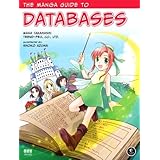
The Manga Guide to Databases Review

The Manga Guide to Databases
Average Reviews:

(More customer reviews)
Are you looking to buy The Manga Guide to Databases? Here is the right place to find the great deals. we can offer discounts of up to 90% on The Manga Guide to Databases. Check out the link below:

>> Click Here to See Compare Prices and Get the Best Offers

The Manga Guide to Databases ReviewBACKGROUND: I spend a large part of my working day in a SQL Server database, so I have very strong database knowledge. My daughter is 9 years old and is a very strong reader, but could care less about how a computer actually works... as long as she can get to ClubPenguin.com or the other websites she likes to visit for fun.
STORY: A friend loaned me this book to show her, so I gave it to her and asked her to try it. If she read the first 10 pages and it was boring, she should stop. If she liked it, she could keep it until she was done. She opened it on the spot and was 20 pages in before she realized she still was standing in the middle of our kitchen. One day later, she was finished and said it was "cool" and that she liked it.
I asked her if she learned anything or if it was just a story and she started talking. She said a little bit and talked about tables and how information is stored in columns and rows. She talked in a 9 year old's language and vocabulary, but basically explained to me the concept and benefits of centralized data stored in a single database. She made a couple other comments whose specifics I can't remember, but clearly articulated database ideas. It was somewhat surreal hearing these things come from a 3rd grader's mouth. She didn't feel like she had learned very much. I told her I probably could count on my fingers how many people at my work (300 people total - manufacturing industry, not IT) knew more about databases than she did, based on what she had finished telling me.
SUMMARY: She felt like she read a fun Manga-style story. In reality, she did that but also learned and retained ideas that normally would be taught to much older people. This book took what could be a dry learning experience and changed it into a fun activity no different than if she was reading her Nancy Drew books or her Lego magazines. I see that there are other topics (statistics, physics, etc.) and I'll ask her if she's interested in seeing any of the other books. If she wants to, I absolutely would buy them.
And obviously, if you're read this far, I completely would recommend this book to anyone interested in learning about databases on an introductory level.The Manga Guide to Databases Overview
Want to learn about databases without the tedium? With its unique combination of Japanese-style comics and serious educational content, The Manga Guide to Databases is just the book for you.

Princess Ruruna is stressed out. With the king and queen away, she has to manage the Kingdom of Kod's humongous fruit-selling empire. Overseas departments, scads of inventory, conflicting prices, and so many customers! It's all such a confusing mess. But a mysterious book and a helpful fairy promise to solve her organizational problems-with the practical magic of databases.

In The Manga Guide to Databases, Tico the fairy teaches the Princess how to simplify her data management. We follow along as they design a relational database, understand the entity-relationship model, perform basic database operations, and delve into more advanced topics. Once the Princess is familiar with transactions and basic SQL statements, she can keep her data timely and accurate for the entire kingdom. Finally, Tico explains ways to make the database more efficient and secure, and they discuss methods for concurrency and replication.

Examples and exercises (with answer keys) help you learn, and an appendix of frequently used SQL statements gives the tools you need to create and maintain full-featured databases.

(Of course, it wouldn't be a royal kingdom without some drama, so read on to find out who gets the girl-the arrogant prince or the humble servant.)

This EduManga book is a translation of a bestselling series in Japan, co-published with Ohmsha, Ltd., of Tokyo, Japan.


Want to learn more information about The Manga Guide to Databases?

>> Click Here to See All Customer Reviews & Ratings Now
Read More...

Microsoft SQL Server 2008 For Dummies (For Dummies (Computer/Tech)) Review

Microsoft SQL Server 2008 For Dummies (For Dummies (Computer/Tech))
Average Reviews:

(More customer reviews)
Are you looking to buy Microsoft SQL Server 2008 For Dummies (For Dummies (Computer/Tech))? Here is the right place to find the great deals. we can offer discounts of up to 90% on Microsoft SQL Server 2008 For Dummies (For Dummies (Computer/Tech)). Check out the link below:

>> Click Here to See Compare Prices and Get the Best Offers

Microsoft SQL Server 2008 For Dummies (For Dummies (Computer/Tech)) ReviewThe author is a good writer, he's well organized, he get's his point across well - the problem is that he doesn't do it enough. This is a nice introduction to MS SQL but its simply too short and ultimately too lightweight for the subject. There are other good beginners manuals out there that, if they aren't as entertaining, are more useful. Dummies cut the legs out from under this text by keeping it so compact - too bad, if he'd had more room he undoubtedly could have created a excellent manual.Microsoft SQL Server 2008 For Dummies (For Dummies (Computer/Tech)) OverviewIf you're a database administrator, you know Microsoft SQL Server 2008 is revolutionizing database development. Get up to speed on SQL Server 2008, impress your boss, and improve your company's data management — read Microsoft SQL Server 2008 For Dummies!
SQL Server 2008 lets you build powerful databases and create database queries that give your organization the information it needs to excel. Microsoft SQL Server 2008 For Dummies helps you build the skills you need to set up, administer, and troubleshoot SQL Server 2008. You'll be able to:
Develop and maintain a SQL Server system
Design databases with integrity and efficiency
Turn data into information with SQL Server Reporting Services
Organize query results, summarizing data with aggregate functions and formatting output
Import large quantities of data with SSIS
Keep your server running smoothly
Protect data from prying eyes
Develop and implement a disaster recovery plan
Improve performance with database snapshots
Automate SQL Server 2008 administration

Microsoft SQL Server 2008 For Dummies is a great first step toward becoming a SQL Server 2008 pro!

Want to learn more information about Microsoft SQL Server 2008 For Dummies (For Dummies (Computer/Tech))?

>> Click Here to See All Customer Reviews & Ratings Now
Read More...