Showing posts with label theory. Show all posts

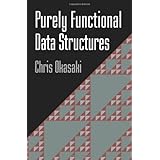
Purely Functional Data Structures Review

Purely Functional Data Structures
Average Reviews:

(More customer reviews)
Are you looking to buy Purely Functional Data Structures? Here is the right place to find the great deals. we can offer discounts of up to 90% on Purely Functional Data Structures. Check out the link below:

>> Click Here to See Compare Prices and Get the Best Offers

Purely Functional Data Structures ReviewOkasaki's slim volume is one of the best expositions on implementing data structures & algorithms in a functional language. After taking an introductory course on functional programming, this would be the book which tells you where to go next.
This book doesn't just present a rehash/rewrite of imperative data structures, only written in a functional language. Instead, Okasaki makes sure to emphasize benefits which only functional programming can bring to the table. For example, many functional data structures can compactly represent not just their current state, but all of their past states as well--a feature called "Persistence". Also, functional newbie programmers might be wondering why lazy vs. strict programming is a big deal, and Okasaki shows clearly where data structures can benefit from either being lazy or being strict.
For the advanced reader, Okasaki also presents several powerful techniques for analyzing the runtime of algorithms, including the so-called "Banker's Method" and the "Physicist's Method" for analyzing amortized algorithms.
I hope that Okasaki comes out with a 2nd edition of this book; there is one missing piece in particular which I really wish he would have included: Although he presents an EXTREMELY lucid description of how to implement Red-Black trees in a functional language, he only presented algorithms for insertion and querying. Of course, deletion from a red-black tree is the hardest part, left here, I suppose, as an exercise to the student. If you want to supply this missing piece yourself, check out a paper by Stefan Kars, "Red-black trees with types", J. Functional Programming 11(4):425-432, July, 2001. It presents deletion routines, but you'll still want to read Okasaki's book first, for unless you're very much smarter than me you won't be able to understand Kars' paper until you read Okasaki's exposition of red black trees.
Finally, this book is not just useful for programmers in functional languages; logic programmers, using prolog or a varient, will also find this book very helpful, because most of the techniques (all of the techniques, really, with the exception perhaps of the lazy programming stuff) can be directly applied in a prolog programming setting as well.
After reading this book and implementing some of the data structures for yourself, you'll be amazed at how fast algorithms can run, even when written in a functional language!Purely Functional Data Structures OverviewMost books on data structures assume an imperative language such as C or C++.However, data structures for these languages do not always translate well to functional languages such as Standard ML, Haskell, or Scheme.This book describes data structures from the point of view of functional languages, with examples, and presents design techniques that allow programmers to develop their own functional data structures.The author includes both classical data structures, such as red-black trees and binomial queues, and a host of new data structures developed exclusively for functional languages.All source code is given in Standard ML and Haskell, and most of the programs are easily adaptable to other functional languages. This handy reference for professional programmers working with functional languages can also be used as a tutorial or for self-study.

Want to learn more information about Purely Functional Data Structures?

>> Click Here to See All Customer Reviews & Ratings Now
Read More...

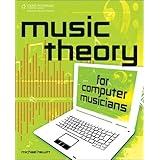
Music Theory for Computer Musicians Bk/Cd Review

Music Theory for Computer Musicians Bk/Cd
Average Reviews:

(More customer reviews)
Are you looking to buy Music Theory for Computer Musicians Bk/Cd? Here is the right place to find the great deals. we can offer discounts of up to 90% on Music Theory for Computer Musicians Bk/Cd. Check out the link below:

>> Click Here to See Compare Prices and Get the Best Offers

Music Theory for Computer Musicians Bk/Cd ReviewI had high hopes for this title. A book about music theory that is centered around the DAW (Digital Audio Workstation) rather than the more traditional approaches used. The layout of the book is a chapter topic, with examples and illustrations followed by a 2-3 page section of review and application questions.
My first gripe was that the answers for the chapters were not included with the book. They are a pdf file you must download from the publisher. Normally I'd be ok with this except that when I bought the book in late May 2008, a month after its release, there was no answer download available. My email to the publisher was never answered leaving me to wonder if there ever would be a set of answers. Not even a canned "form letter response" ever arrived which would have at least acknowledged a receipt.
The first few chapters were fairly easy and the "official" answers were not really needed to know if you had answered correctly. As I got to the end of Chapter 7 on Meter I ran into questions that, to me seemed to be misprints, as the listed meters did not match the illustration of notes. This was the formation of my second big gripe. Standard 4/4 time is easy to understand and read but the author delves into 9/16, 2/4 and 3/8 time which takes the new theory student (i.e. me) some time to figure out how to interpret. The questions in this chapter had duplications and errors that were very confusing as I was trying to understand the topic and answer the questions while the questions themselves contained notation errors.
The answer download is available now, some 5 months after the book's release and sure enough chapter 7 answers show that the questions posed there had several misprints and errors. By this time I had already gone on to other books on theory and been able to correctly identify the mistakes. The problem is many new students to music theory will simply hit a confusing brick wall at this point since they are trying to answer "fill in the missing note" questions that have the wrong time signature to start with.
Now had the answers been available at the time of publication or, better yet, included with the $35 book, when I ran across these areas of seeming mistakes I would have been able to save myself any confusion and see it was just a misprint. Instead I had to go to other sources of music theory instruction to see if I was mistaken or misunderstanding the book. Not good.
I went on after chapter 7, but as the material became more complex I became less confident in the questions even being asked correctly. It is hard to learn from a source that you believe contains printing or content errors because as a student you simply can't tell if what you are being told is right or wrong. As the complexity rises you rely on solid examples and questions to understand and without a set of answers available I put the book away and went elsewhere.
It is a shame because the layout and writing style were good. The book got off to a good start but the problems in Chapter 7 and lack of official answers made further progress difficult.
Since the answers are out now and show the corrected questions perhaps the 2nd edition of the book will be able to fix the mistakes. People with the 1st edition can see the mismatches right away now instead of wondering why they can't seem to get a firm grasp on a topic.
I blame the publisher and editor of the book rather than the author. The author seems to have a good command of theory and put together a timely book. Unfortunately the failure of the publishers and editors made this a waste of money for me at the time. If you buy it now, since the answers are out, you may have a much better experience with it. I feel a bit like a beta tester honestly.Music Theory for Computer Musicians Bk/Cd OverviewMany DJs, gigging musicians, and electronic music producers understand how to play their instruments or make music on the computer, but they lack the basic knowledge of music theory needed to take their music-making to the next level and compose truly professional tracks. Beneath all the enormously different styles of modern electronic music lie certain fundamentals of the musical language that are exactly the same no matter what kind of music you write. It is very important to acquire an understanding of these fundamentals if you are to develop as a musician and music producer. Put simply, you need to know what you are doing with regard to the music that you are writing. Music Theory for Computer Musicians explains these music theory fundamentals in the most simple and accessible way possible. Concepts are taught using the MIDI keyboard environment and todayÂ's computer composing and recording software. By reading this book and following the exercises contained within it, you, the aspiring music producer/computer musician, will find yourself making great progress toward understanding and using these fundamentals of the music language. The result will be a great improvement in your ability to write and produce your own original music!

Want to learn more information about Music Theory for Computer Musicians Bk/Cd?

>> Click Here to See All Customer Reviews & Ratings Now
Read More...